 TICKETS
 DONATE



Arizona Bark Scorpion
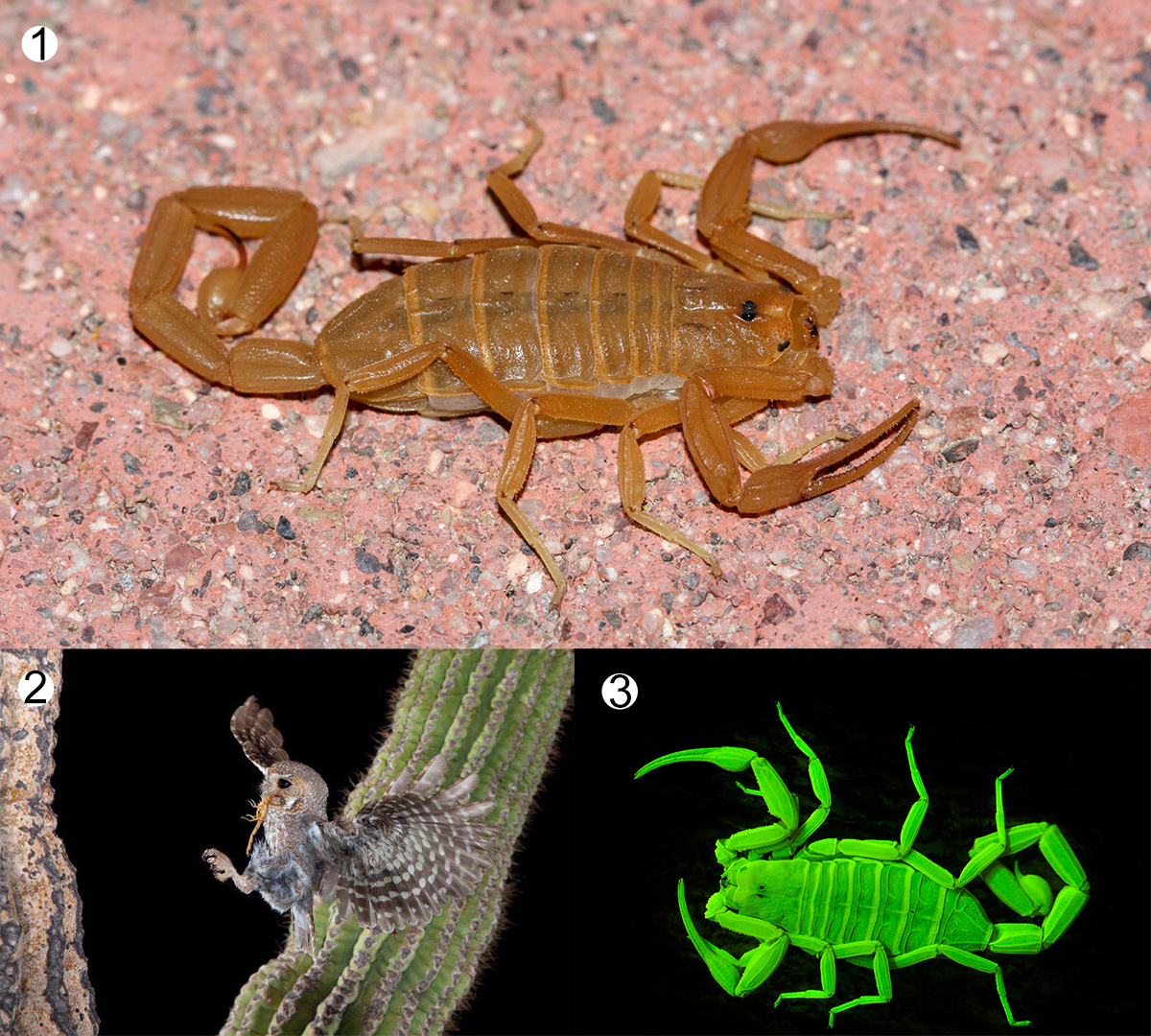
1) By Andrew Meeds - https://www.inaturalist.org/photos/191624836, CC BY 4.0: 2) Owl eating scorpion: 3) Alan Rockefeller - Own work, CC BY-SA 4.0 Scorpion under UV
About
Strong pincers, a venomous sting, and the ability to glow in the dark are just some of the many superpowers of bark scorpions! Bark scorpions are small, light brown arachnids with eight legs, a long body and segmented tail that is tipped with a venomous stinger. They are related to spiders, ticks, and other members of the arachnid group. Bark scorpions are one of more than 2,500 scorpion species worldwide, with more species waiting to be discovered.
Adaptations
Scorpions have hair all over their body and legs that sense vibration in the air which helps them find their prey and avoid predators. Their light brown coloration also helps them blend into their desert environment to avoid being seen by both predators and prey. To stay cool in the desert, bark scorpions come out at night to hunt for food. In the winter when it is cold, they will hibernate, often gathering in a large group.
Food Web
Scorpions play an important role in the desert food web. Bark scorpions eat all types of different insects, spiders, centipedes, and even other scorpions! Bark scorpions will grab prey with their pincers, sting it, and inject it with venom to paralyze it. Since they have tiny mouths, they use digestive enzymes to turn their prey into a liquid and slurp it up.
Lots of animals in the desert eat bark scorpions. Predators include centipedes, tarantulas, other scorpions, lizards, small snakes, birds (especially owls), bats, shrews, and grasshopper mice. Many animals will break the tail off the scorpion before they eat it. Elf owls will break off the tail before feeding the scorpion to their young in the nest.
Habitat and Range
Scorpions are found on all continents except Antarctica but are most common in desert and semi-desert habitats. The Arizona bark scorpion is commonly found in the Sonoran Desert throughout the southwestern United States and northwestern Mexico.
Scorpions are often found under rocks, logs, or in rock crevices. They are attracted to cool, moist, and dark areas. Bark scorpions are great climbers and often cling upside down on surfaces. They are well known for hiding under the bark of trees, thus “bark” scorpion.
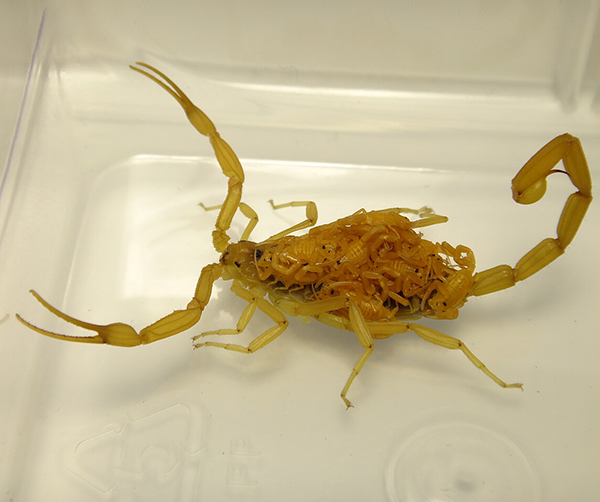
By David S. Flores - Own work, CC BY-SA 3.0, Scorpion with babies
Family Life
Unlike most other scorpion species, bark scorpions can be found hanging out in groups. Male scorpions will use their pedipalps (pincers) to grasp the females pedipalps and do a “courtship dance”. Courtship and mating will last 30-60 minutes. After about 8 months, the female bark scorpion will give live birth to 13 to 47 young in the summer months. When the babies are born, they quickly climb up their mother’s pincers and legs to her back, where they will safely ride until their first molt in 7 to 21 days.
Glossary
- Arachnid:
- a category of animals that have eight legs and no antennae
- Digestive enzymes:
- proteins inside the body that help break down food
- Courtship:
- behaviors to attract a potential mate for reproduction
- Molt:
- when an animal sheds its outer layer of body covering
Fun Facts
- Scorpions are the oldest arachnids known from fossil records. The ancestors of today’s scorpions had gills!
- Scorpions molt to grow; they do not glow under UV after they molt until their exoskeleton hardens
- Scorpions glow under UV light.
Conservation
Scorpions help keep our ecosystem balanced. They are really important in helping control insect populations and are also food for a lot of animals in the Sonoran Desert. Their venom is also used in medical research. While bark scorpions are not currently considered a threatened species, they are affected by habitat loss and the use of pesticides.
Challenges
Bark scorpions are often killed by people who think they are dangerous or pests. Remember when out in nature (especially at night) to wear shoes and be mindful of scorpions before picking up rocks or debris in the desert. Things you can do to prevent scorpions from entering your home are seal any cracks around doors and windows, remove hiding places such as rock and wood piles, and use minimal or yellow lighting around your home.Conservation Index
At The Museum
View on Map
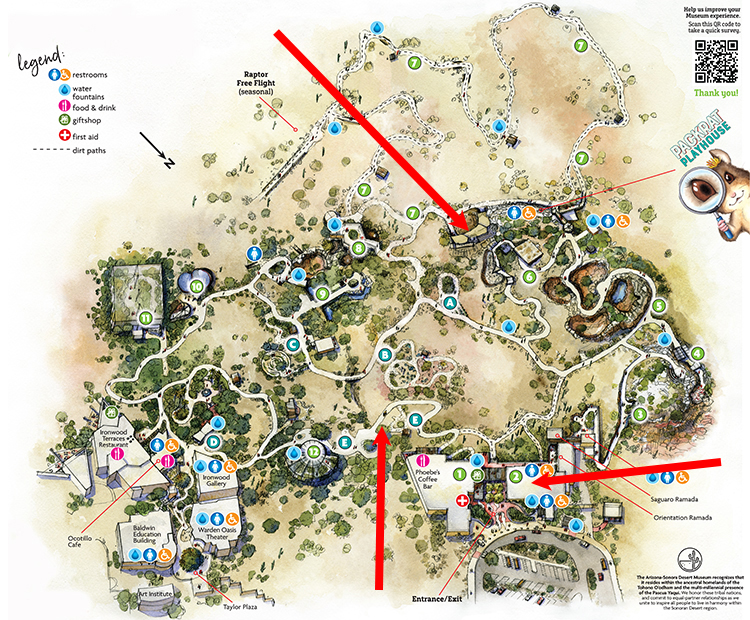
Come visit us during Cool Summer Nights and bring a blacklight to search for scorpions.
Check out scorpions at the Life on the Rocks exhibit or in Reptiles and Invertebrates Hall.