Tumamoc Hill
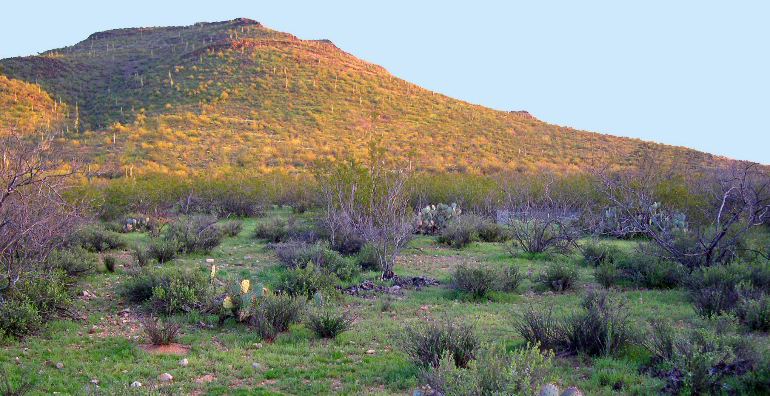
Tumamoc Hill, located on the banks of the Santa Cruz River in the heart of Tucson, was settled by the ancestors of the Tohono O'odham over 4,000 years ago. Their continuous stewardship of the hill and surrounding areas establish Tucson as one of the longest continuously inhabited sites in the United States. In 2017, we launched a long-term initiative to control invasive species and preserve this historic landmark in partnership with the University of Arizona Desert Laboratory.
|
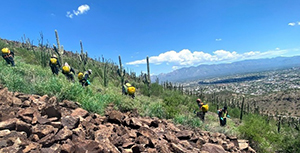
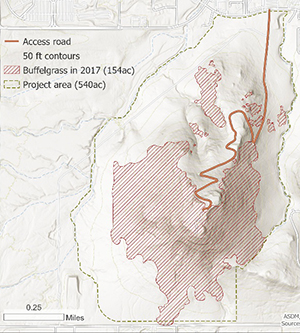
Threats to TumamocThe greatest threat to the saguaros and biodiversity on Tumamoc Hill is buffelgrass, an invasive grass that not only displaces Sonoran Desert plants, but also burns at exceptionally high temperatures intolerable to native plants and wildlife. Without active management, buffelgrass will likely prevent the establishment of the next generation of saguaros on the hill in any location where it becomes the dominant species. Project PlanA buffelgrass removal project, encompassing a 540-acre target area, began on Tumamoc Hill in 2017. A baseline survey of the project area found 195 acres (36%) to be heavily infested with buffelgrass. We exclusively utilize herbicide to treat buffelgrass on the hill because its archaeological status restricts any methods that might harm historic artifacts. Our ProgressBuffelgrass has been treated on Tumamoc Hill annually since 2017 with the exception of 2022, when low rainfall prevented effective treatment. In addition to protection of Tumamoc Hill itself, these buffelgrass treatments have reduced fire risk and provided useful insights for land managers across southern Arizona. |
|
Buffelgrass is here to stay. Protecting our desert landscapes requires a commitment to consistent control of this invasive grass. Across the region, land managers continually work to control buffelgrass to reduce the threat of fire and protect our native plants and animal communities.
